

Behaviour Tales
This resource delves into the amazing world of animal hygiene exploring how animals - from birds preening their feathers to mammals licking their fur and insects maintaining their exoskeletons - employ unique strategies to stay clean.This resource can be effectively integrated into science lessons focusing on animal adaptations or health and hygiene units. The activity around it can be adapted to increasing or decreasing complexity for older or younger students, respectively.
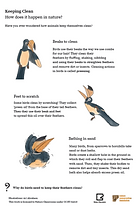
Animal Grooming Charts
Note for Educators
Begin by asking students how and why they keep themselves clean. Introduce the concept that animals also groom themselves using different organs and behaviours that we do not have or use! Use the poster to discuss specific examples, and explore other animal grooming behaviours students might have observed of domestic animals around them. This
resource is a direct example of how local nature and ecology can be incorporated into our EVS textbook chapters.
Questions to Explore
Why do animals need to keep clean? How do their methods compare to ours? Students can be encouraged to observe pets or local birds for grooming behaviors, draw different animals grooming, roleplay/enact different grooming behaviours, or even research other unique animal cleaning habits (e.g., ants grooming each other, fish cleaning stations).